
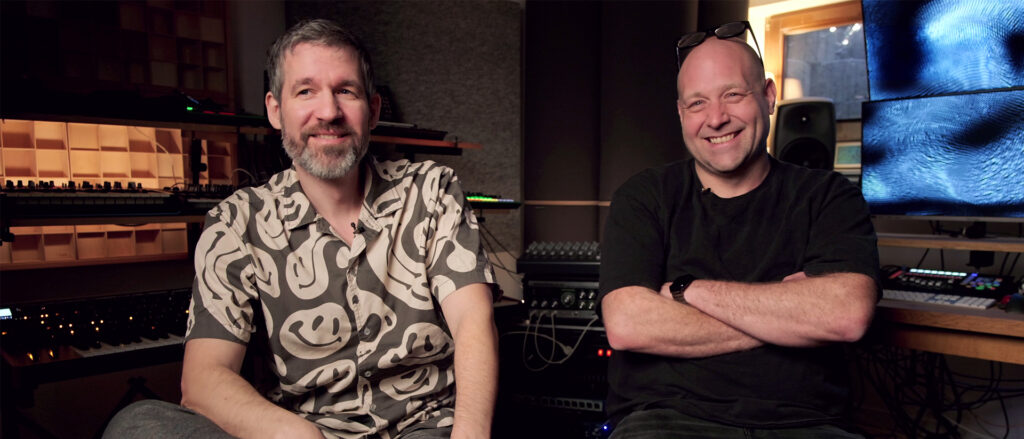
The Berlin-based DJ and producer duo AKA AKA asked us to take care of the acoustic design of their new studio space. The aim was to achieve an uncompromising acoustic result for an optimal monitoring environment. We managed to control the bass by installing 10 bass traps in each of the front corners of the room. The rest of the room was then fitted with additional bass traps, diffusers and acoustic panels. At the rear of the room, two partition walls were used to create a vocal booth that can be set up as required, thereby enabling vocal recordings to be made within the room.
AKA AKA on their collaboration with HOFA:
This is the best sounding studio we’ve ever had! And the reverberation time is perfect.
First, we sent the measurements of the room including a frequency image to HOFA. We then received a detailed 3D planning + calculation and a recommendation which acoustic elements were necessary (diffusors, bass traps, acoustic sails, etc.). In our studio we also have a free-standing acoustic divider which we use for vocal recordings – the perfect solution for us.
We chose HOFA because it simply looks amazing. The modules are all beautifully designed and the contact was super nice too.
AKA AKA
DJ, Producer duo


And this is how the collaboration with AKA AKA worked in detail:
1. Contact
The first contact was made by e-mail. They sent us initial information about the space and asked for an assessment of the required steps. After my initial assessment, we talked about the following procedure. In larger projects, a 3D room planning always makes sense. The planning costs are credited afterwards, and the customer will get a better idea of the proposed solution through the visualisations. In addition, we acousticians have the advantage of being able to create a more detailed and accurate plan that is perfectly tailored to the conditions of the room. Holger and Hannes saw it the same way.
2. Modelling, simulation and proposed solution
In addition to detailed sketches and more photographs, we also asked the clients for additional information. In such cases, the properties of the walls, ceiling, and floor, among other things, have to be considered. Specific wishes and objectives are also requested in detail and discussed afterwards. This information is usually submitted by the client via an online form.
When I had all the information, we started with the 3D modelling. In this process, the original room is modelled as accurately as possible in its actual state.


When the model was ready, we started the simulations to calculate the reverberation time and room modes. The information obtained beforehand (dimensions, materials, and interior) serves as the basis for these calculations. Afterwards, the results of the simulation are evaluated, and the required acoustic modules are included in the calculations in order to display the result after optimisation.


The next task was to place the required modules carefully in the room. Furthermore, the optimal loudspeaker and monitoring position as well as all relevant initial reflection points are determined during this process.

The focus of this project was clearly on the optimal monitoring situation, since producing, mixing, and mastering are the main tasks. Another goal was to create a good setup for recording vocals.


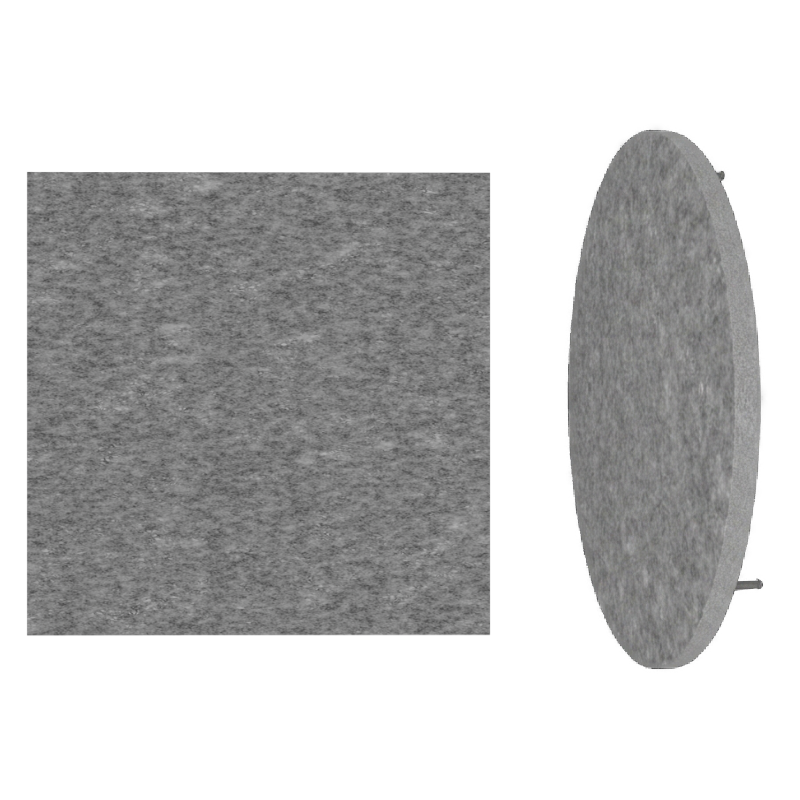
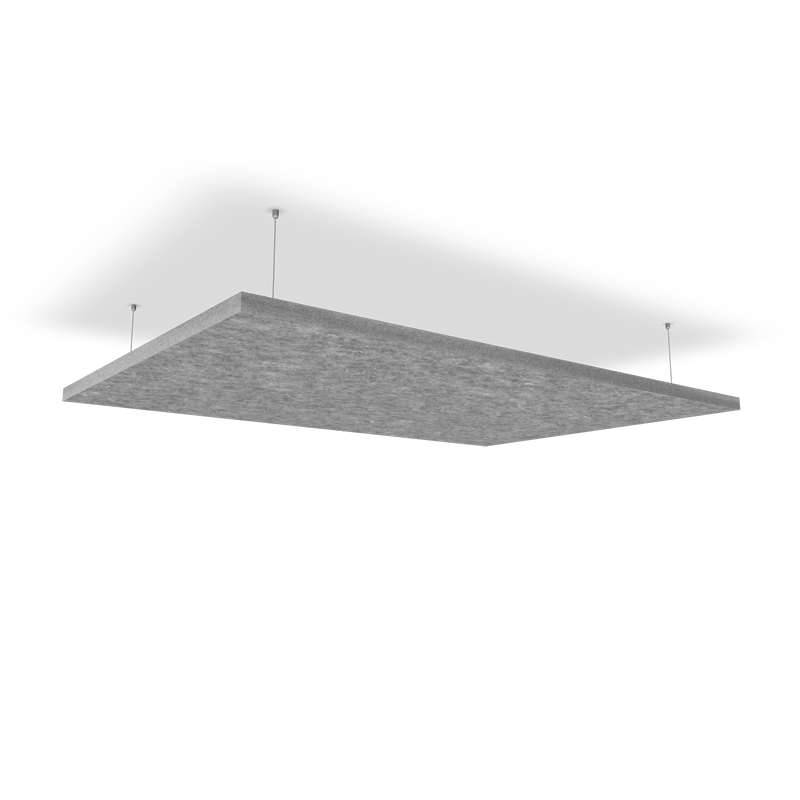
The grey elements at the first reflection points are broadband absorbers that minimize reverberation time, especially in the high and mid frequencies, and are ideal for dampening first reflections from the ceiling and walls. These modules were also used for the requested vocal corner, again to manage harsh reflections and thus create a professional recording environment. There is also a mobile wall there. If necessary, this can be placed behind the monitoring position to reduce hard reflections from the door over a wide range when monitoring with the loudspeakers.
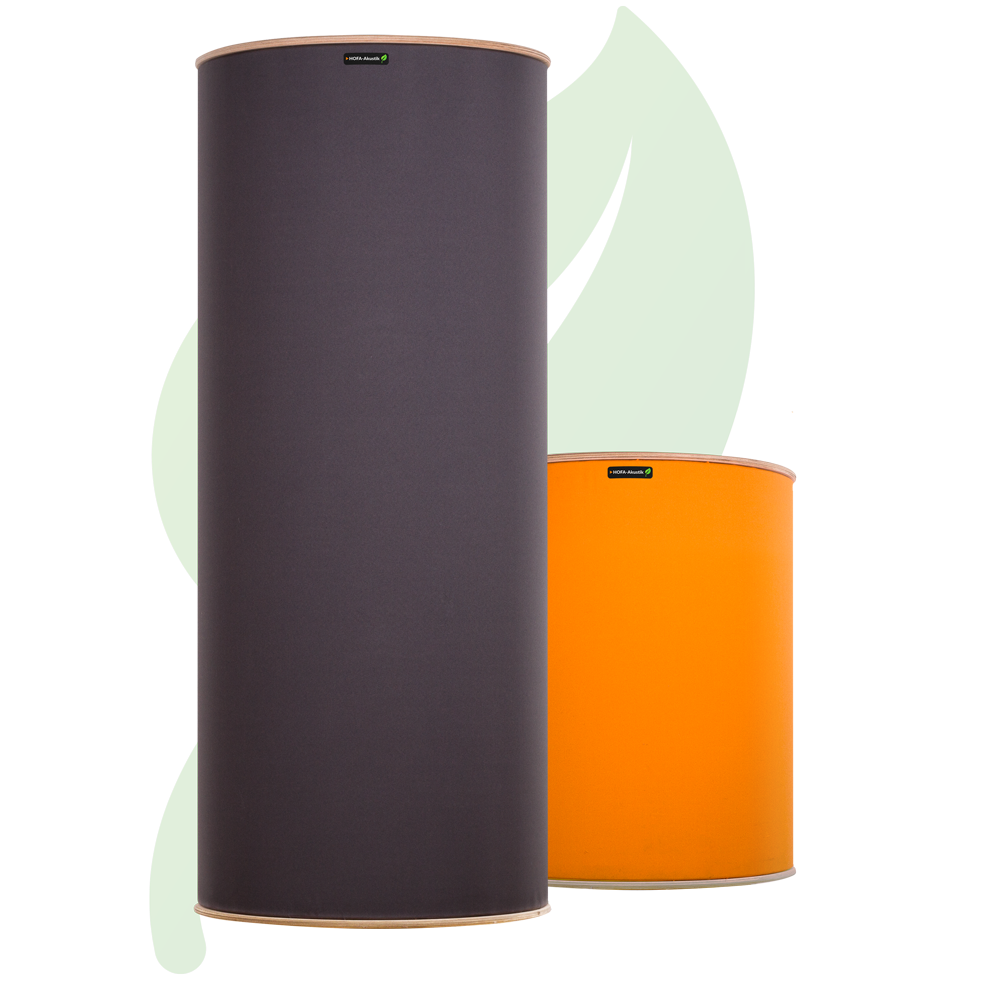
We also used bass traps. Due to the chosen setup, these modules absorb the low frequencies most effectively. Because of the material thickness achieved in this way, the effectiveness below 80 hertz is increased enormously.
The diffusers in the back of the room are designed to diffuse further harsh reflections, creating a softer, more homogeneous acoustic quality.
3. Delivery and installation
Barely three weeks after the planning, the goods were already at AKA AKA’s studio. If assembly is requested, we offer this service and take care of the entire process. However, Holger and Hannes wanted to carry out the assembly themselves. Accordingly, we provided an installation plan with all the relevant details and instructions.


4. Completion
The guys were enthusiastic about the acoustics right from the start. Measurements they took themselves still showed small irregularities in the bass range, which are typical for small rooms, but do not impair professional work. We generally recommend experimenting with the loudspeaker and monitoring positions as well as the bass positioning. Often, the improvements achieved so far can be further enhanced.
Would you like to learn more about our acoustic modules, or do you have any questions? Feel free to contact us by phone or e-mail.
Products used in this project
-
HOFA Basstrap
From 169,00 € -
HOFA Wall Sail
From115,00 €103,50 € -
HOFA Ceiling Sail
From115,00 €103,50 € -
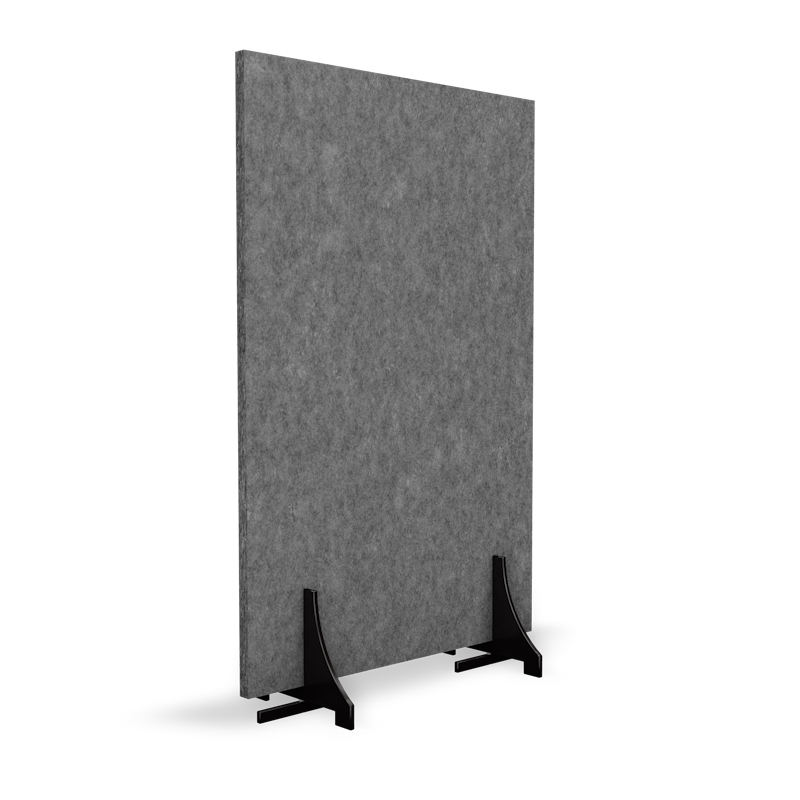
HOFA Acoustic Room Divider
From 409,00 € -
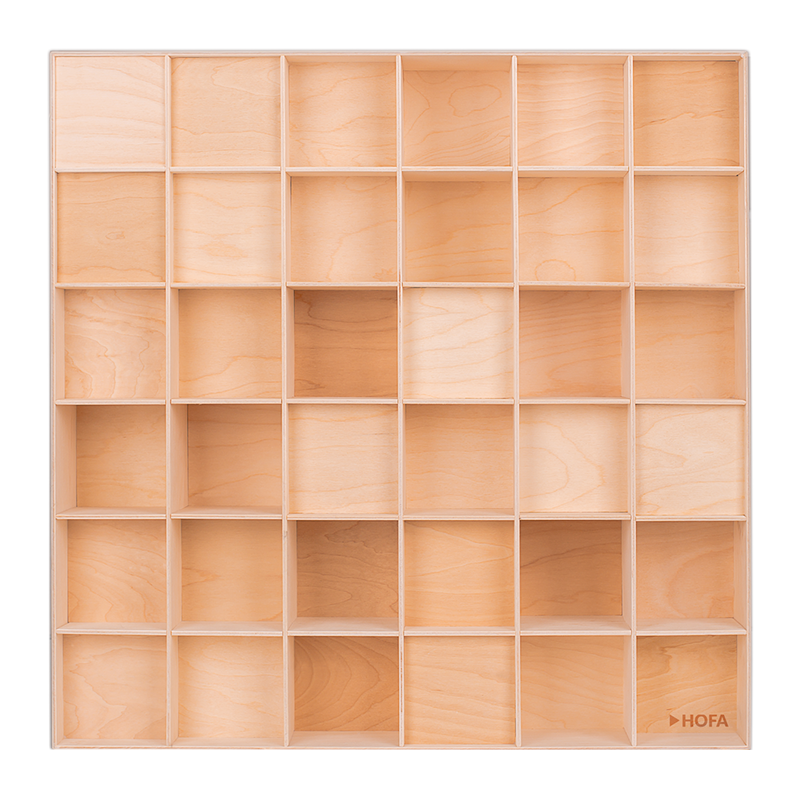
HOFA Diffusor
From 99,00 €