

Or: The carpet is a poor absorber!
Anyone looking to improve the room acoustics in their studio usually starts with the right basic idea: “I need soft material in the room to absorb the sound.”
The next step, however, is choosing the right material for the room and its intended use. Materials that are too thin – such as acoustic foam with a convoluted surface, large areas of carpet, or thin curtains – can be problematic.
After adding materials like these, the acoustic result is often disappointing: reverberation at high frequencies is now excessively damped, while the rest of the frequency spectrum has barely improved at all. Boomy bass and overly prominent mids can then dominate the sound of the room.

Poor acoustic solutions: carpet, thin curtains, acoustic foam
The problem caused by absorbers that are too thin can be explained by the frequency-dependent absorption coefficient of acoustic absorbers. In this article, you’ll learn what this means, why broadband absorption is essential for professional studio sound, and how selective sound absorption can noticeably improve the accuracy in your studio.
The theory: what is the absorption coefficient α?
The absorption coefficient α (alpha) is a measure of the effectiveness of an acoustic element. It is a factor and has no unit of measurement, meaning it is independent of the absorber’s surface area, and describes the ratio of incident sound energy to absorbed sound energy on a scale from 0 to 1:
- α = 0: Complete reflection (the sound is completely reflected, like from a hard concrete wall).
- α = 1: Complete absorption (the sound energy is completely absorbed).
For professional acoustic solutions, this value is specified across different frequency ranges.
A material may, for example, absorb sound very effectively at high frequencies (α = 1), while having little or no effect at lower frequencies. This frequency-dependent behavior is one of the most important factors to consider when planning good room acoustics and selecting suitable absorbers.
The risk of narrow-band absorption
Thin acoustic elements can only absorb high frequencies due to their physical properties. If a room is treated exclusively with materials like these, you are essentially only removing its brilliance. In other words, the high frequencies are heavily damped, while the energy – and therefore the reverberation – in the mid and low frequencies remains unchanged. The result is an unnatural sound that feels dull and overly prominent at the same time, making reliable mixing and mastering decisions much more difficult.
This is comparable to the acoustics of ordinary rooms, where carpets and curtains strongly influence the sound. With absorbers that are too thin, even the best-case result tends to sound more like a typical living space than a professional recording studio designed for sustained listening levels and working conditions that require accurate, uncompromised monitoring.
It is therefore always advisable to choose the right acoustic products and, for larger projects, to consult professional acousticians.
Porous absorbers: energy conversion through friction
To absorb sound effectively, we at HOFA-Akustik use what are known as porous absorbers. In simple terms, a porous absorber consists of an open-pored material that provides a defined resistance to the sound energy passing through it, slowing it down.
When a sound wave hits the absorber, the air molecules must move through the material’s fine pores. This creates friction, which converts the particles’ kinetic energy into heat. Which frequencies an absorber can effectively “slow down” depends on the thickness of the material. Only an absorber with sufficient thickness can effectively address the longer wavelengths of lower frequencies.
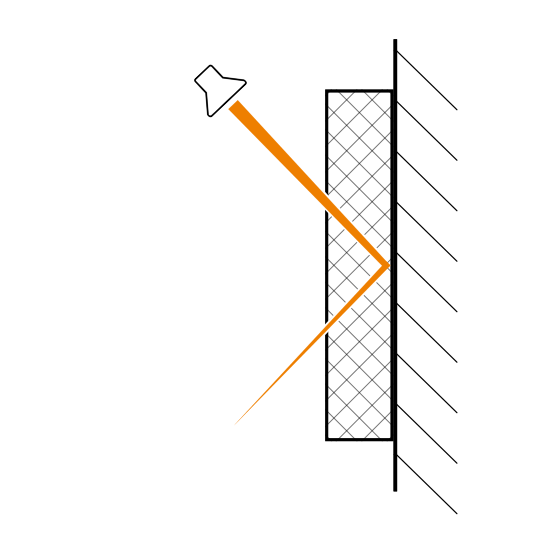
Cross-section of wall and absorber with incoming sound
A short excursion into physics: wavelength and absorber thickness
A short excursion into physics: wavelength and absorber thickness
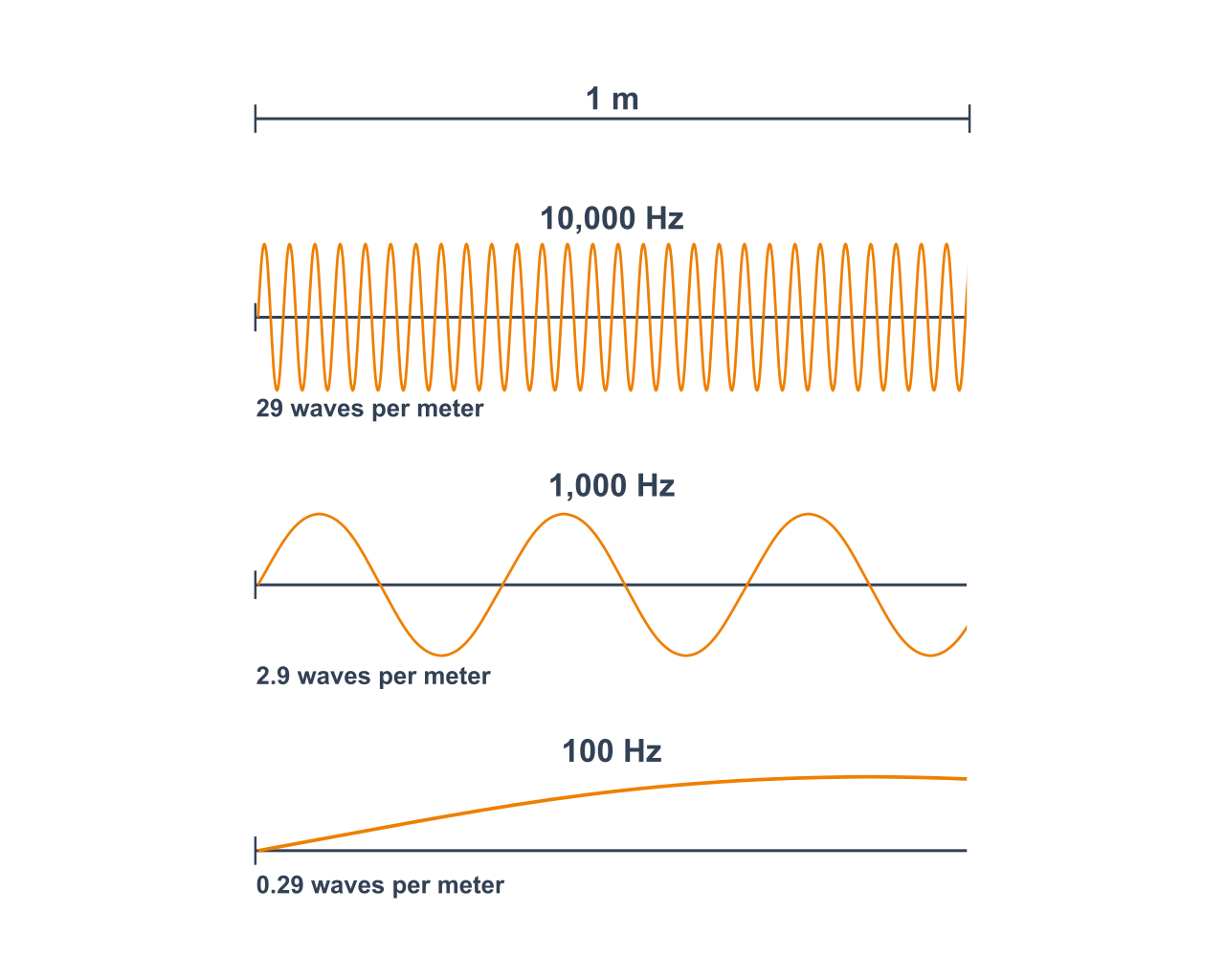
Wavelength is a physical property of sound. Every frequency has its own wavelength. It can be calculated by dividing the speed of sound by the frequency whose wavelength you want to determine. Examples:
- 10,000 Hz has a wavelength of: 343 m/s / 10,000 Hz = 0.0343 m = 3.43 cm
- 1,000 Hz has a wavelength of: 343 m/s / 1,000 Hz = 0.343 m = 34.3 cm
- 100 Hz has a wavelength of: 343 m/s / 100 Hz = 3.43 m = 343 cm
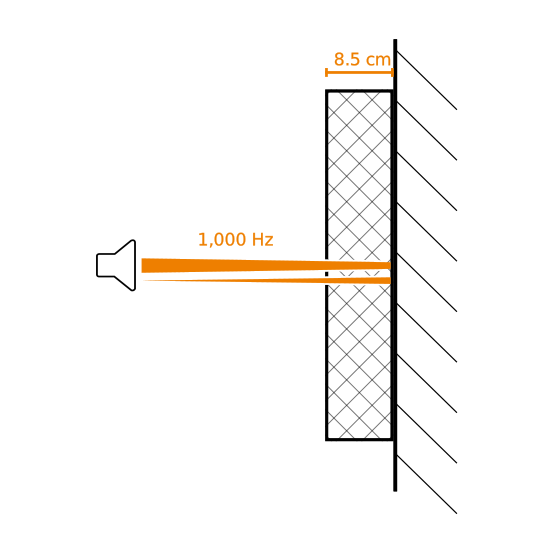
In theory (according to the textbook) an absorber should be approximately one quarter of the wavelength of the lowest frequency you want to absorb. This is related to the difference between particle velocity and sound pressure, but for the sake of simplicity, we will skip that aspect in this article.
A quarter of the wavelength means that, to fully absorb sound at a frequency of 1,000 Hz, an absorber would need to be 0.343 m / 4 = 8.5 cm thick. However, this only applies to sound arriving directly from the front and being reflected exactly once.
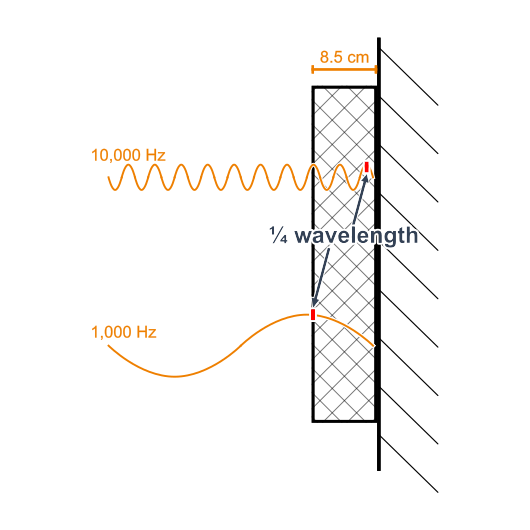
Outside the textbook, in a real room, the goal is not to almost completely eliminate sound energy arriving perpendicular to the absorber. Instead, the aim is to reduce the sound energy reflected by walls and ceilings so that the balance at the listening position between the direct sound from the speakers and the room reflections is improved. This allows you to work on your audio reliably and with confidence – at a reverberation time suitable for studio use.
In practice, most sound travels a longer distance through the absorber than the absorber is physically thick. And it is not only direct sound that passes through the absorber but also sound that has already been reflected one or more times within the room. It is therefore always advisable to consider the effect of absorbers on reverberation – in other words, on sound arriving from all directions.
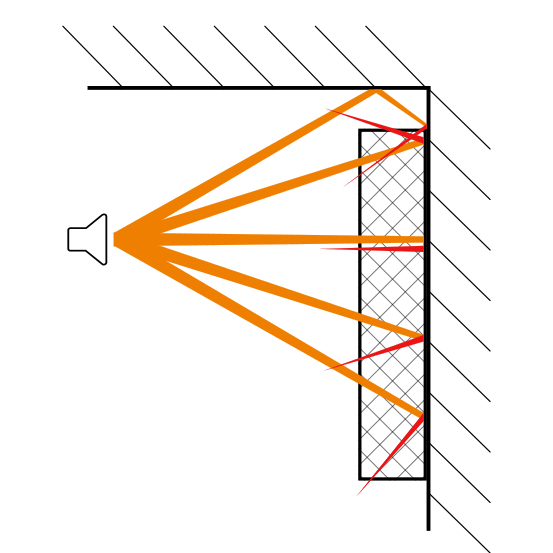
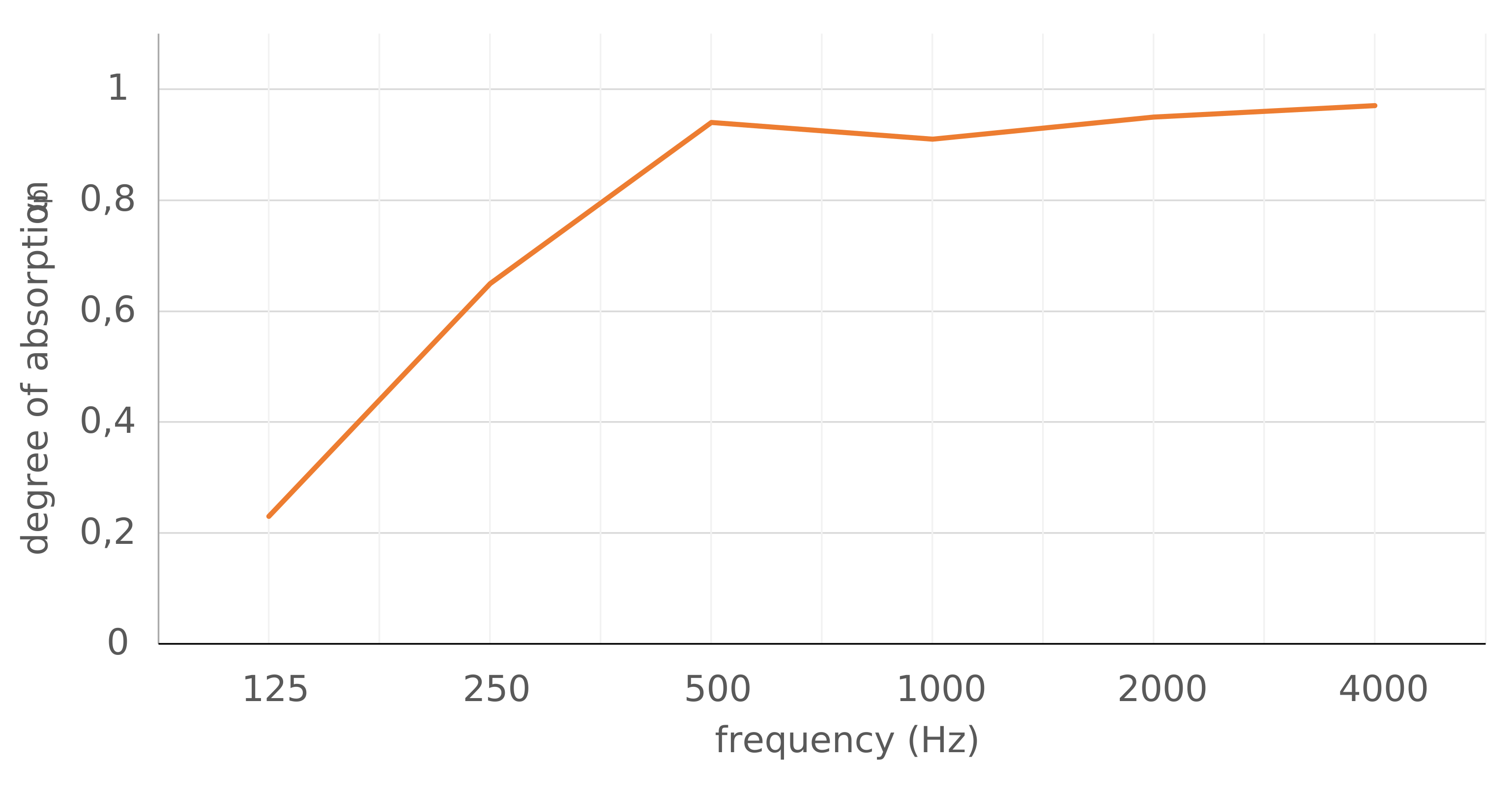
For example, absorbers with a thickness of 10 cm are very well suited to improving the sound of a room across a broad frequency range. They are highly effective from around 200 Hz upwards, even though one quarter of the wavelength at 200 Hz would theoretically be 343 m/s / 200 Hz / 4 = approximately 43 cm.
The HOFA Absorber Natural is a good example. It is 10 cm thick and shows the following results in acoustic measurements:
By the way, an absorber does not necessarily have to be filled throughout its entire depth. What matters most is that the absorber’s surface is positioned far enough away from the acoustically reflective surface behind it. Put simply, there is little difference between an absorber that is 10 cm thick and one that is 5 cm thick with a 5 cm air gap behind it.
However, this principle only works within certain limits. A 5 cm thick absorber does not automatically become a bass absorber simply by mounting it 50 cm away from the wall or ceiling. Nevertheless, this effect can be used to your advantage – for example with our acoustic ceiling and wall sails, which can be installed with an air gap behind them or suspended below the ceiling.
A little more physics:

The effectiveness of absorbers depends not only on their thickness. Other factors also play an important role, including porosity, density, and the resistance mentioned earlier, which acts against the sound energy and slows it down. If this resistance is too low or too high, the absorber will not work effectively. This is one of the main reasons why the construction of acoustic modules is best left to professionals.
In summary, a professional acoustic module should provide the most even absorption possible across a broad frequency range. The goal is to achieve a balanced reverberation time across the entire audible frequency spectrum, so that the room retains a natural sound.
HOFA Absorbers: precision for studio
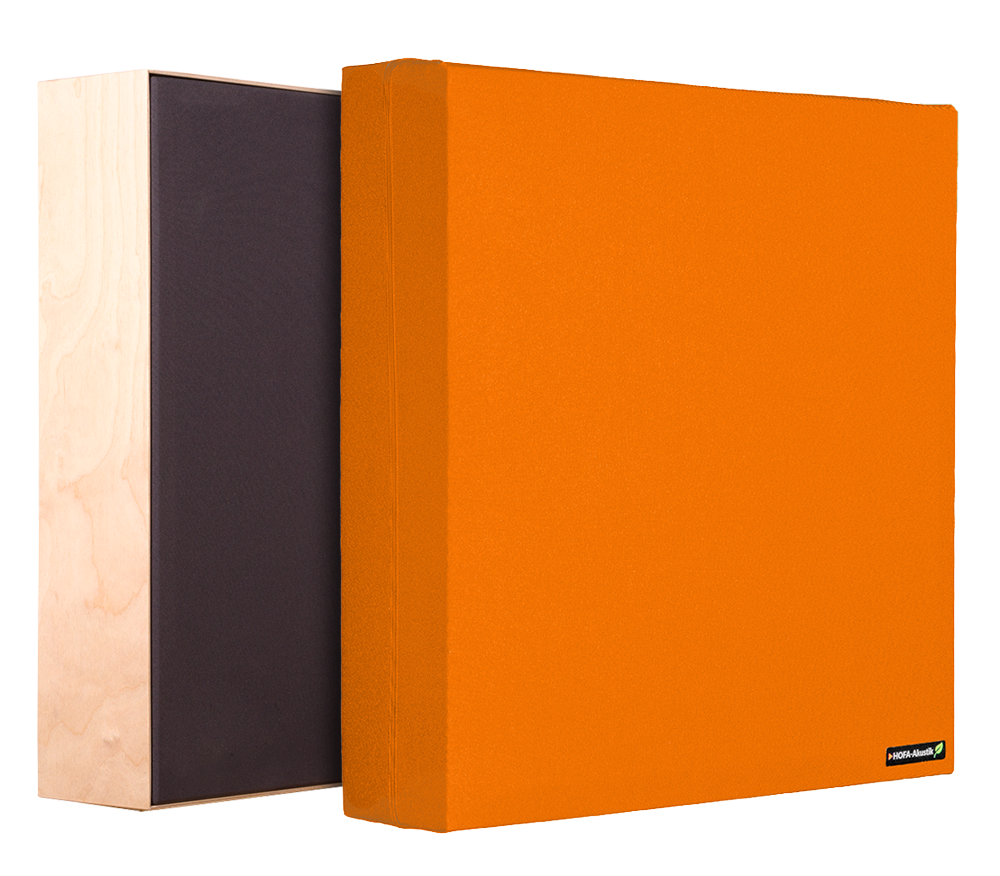
Our classic HOFA Absorbers (Studio-Line) were specifically designed to meet these requirements. Thanks to their construction, they provide effective absorption from 200 Hz upwards. They eliminate unwanted flutter echoes and improve localization within the stereo field without making the room sound dull.
The perfect duo: absorbers & basstraps
Although HOFA Absorbers provide effective broadband absorption with their 10 cm thickness, they should be combined with HOFA Basstraps for more demanding room-acoustic requirements:
- Absorbers, ceiling sails, and wall sails provide transparency, clear mids, and precise stereo imaging.
- Bass traps are placed, for example, in the corners of a room to control the low-frequency range and reduce the effects of standing waves (room modes).
Only this carefully coordinated combination creates a controlled acoustic environment in which you can fully focus on what matters most when recording, mixing, and mastering.

Optimal studio acoustics with bass traps, absorbers, diffusers and acoustic curtains
Ceiling and wall sails: acoustics and design combined
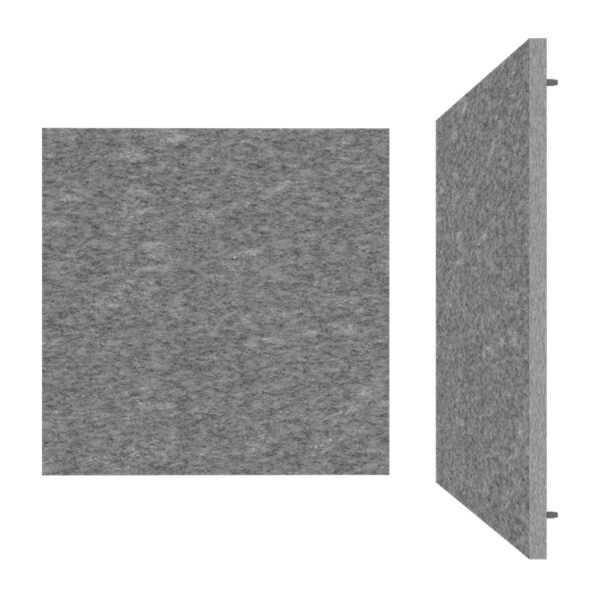
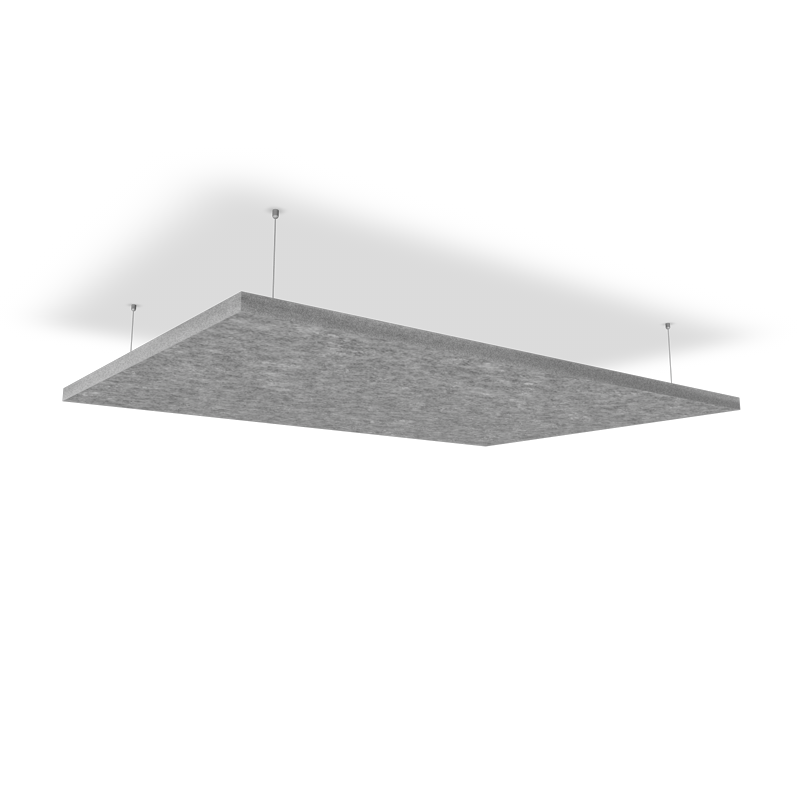
In rooms where flexibility and aesthetics play a major role, HOFA Ceiling Sails and Wall Sails (Style-Line) are the ideal choice.
Ceiling sails are particularly effective at controlling vertical reflections from the ceiling and between the floor and ceiling – a critical issue in almost any room. Thanks to the accompanying ceiling mounting kits, the distance from the ceiling can be adjusted. This makes the sound-absorbing effect even more broadband.
Wall sails provide large-area broadband absorption in an elegant design that integrates seamlessly into modern workspaces or high-end studios. When used with the accompanying wall-mounting kits, the effect at lower frequencies is further enhanced by the mounting distance from the wall.
Conclusion: think about acoustics holistically
Good room acoustics are not a matter of chance, but the result of physically good planning. Broadband solutions provide a reliable foundation for professional audio work. Our HOFA modules are designed to complement one another – for balanced, convincing sound across the entire frequency spectrum.
Discover our acoustic modules in the shop or get advice from our experts to find the right combination for your project.