

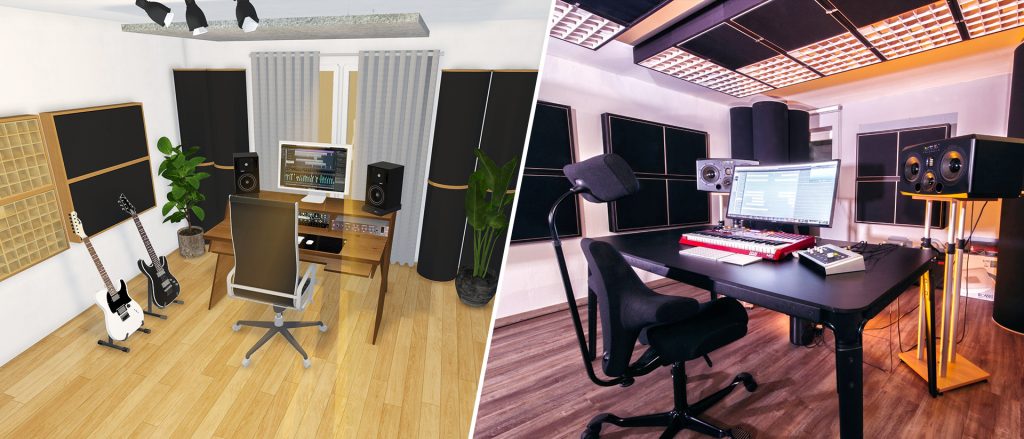
Did you know you can transfer the acoustic principles of professional studios to your own rooms relatively easily? That way, you can work at a top level in your home studio or in almost any other room. With the following ten points, we want to help you identify your acoustic problems in your home studio and show you the benefits of dealing with room acoustics.
1. You can trust your ears
Optimizing your room acoustics will quickly improve your feel for how a mix should sound to you. Working more confidently and approaching audio work with a more positive mindset will strengthen your trust in your hearing and your own mix decisions. And listening becomes a lot more fun, too!

Studio by Henning Baer, techno DJ and producer.
HOFA wall sails and HOFA bass traps visible
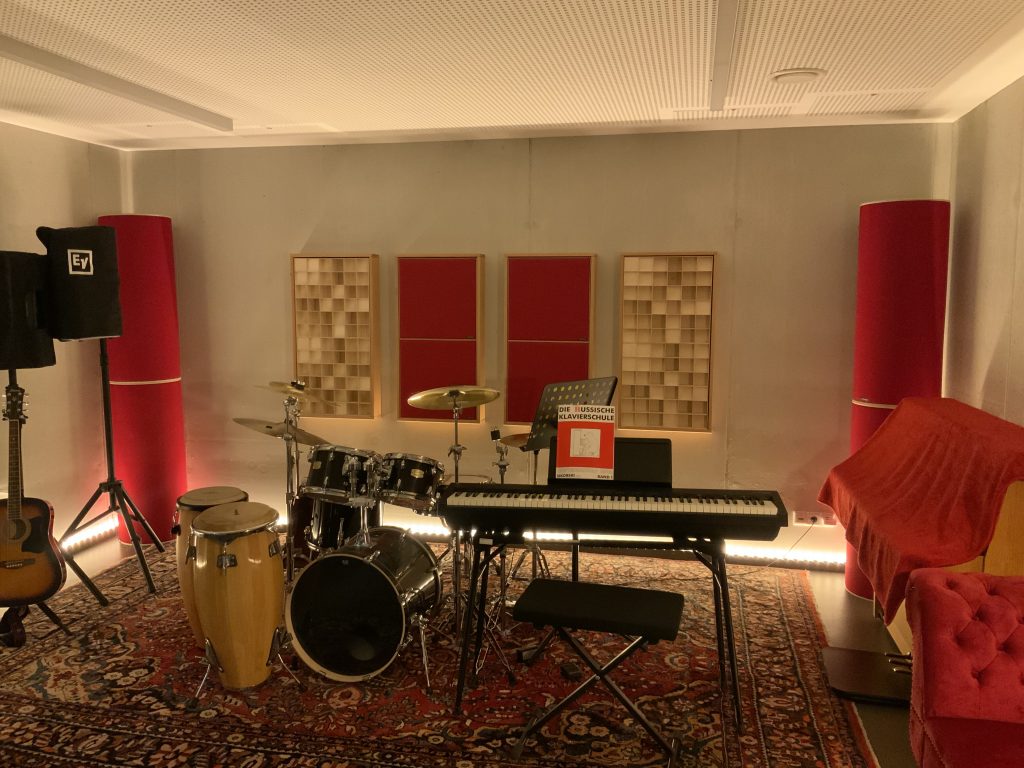
Rehearsal room at the Piustreff youth center with various HOFA Studio Line products
2. Your mix decisions feel right
What you’ve just done in the mix shouldn’t keep making you wonder whether this or that was the right call. With good room acoustics, questions turn into answers, because you can actually hear what you’re doing. Suddenly, 1 dB EQ moves or small changes to compressor settings become truly audible. That also makes it easier to tell when you’ve gone a bit too far—or when you can push the level or effects with confidence.
3. You hear your speakers’ sound uncolored
In an untreated room, sound reflections from the walls and ceiling can distort what you hear at your listening position. This can affect the frequency response, dynamics, and stereo imaging in many ways. As a result, your speakers won’t sound neutral.
With room acoustic optimization, your sound gets a neutral foundation and precise work with EQ, compression, and spatial effects becomes possible. The key is using high-quality acoustic modules that have been tested for acoustic performance.
If you’re wondering how many modules you need, which types, and where they should go, our acoustic pros will be happy to help. Just send us a free planning request or contact us directly.
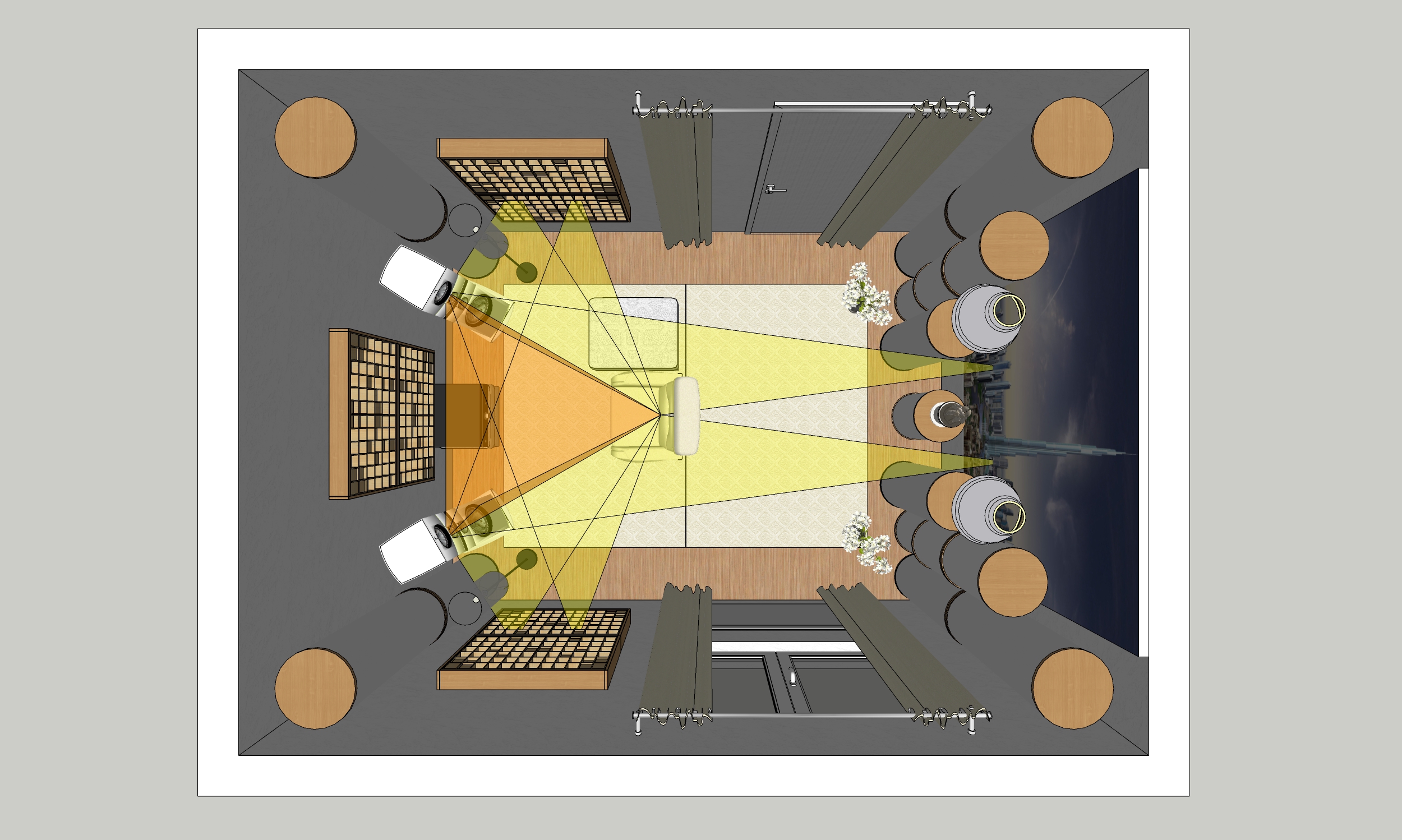
Example: HOFA room planning
4. Finally reliable results instead of long revision rounds
If your room swallows bass, you’ll turn it up too much in the mix. If it overemphasizes bass, your mix will end up thin. You usually only notice once you listen to the song somewhere else. Room acoustic optimization helps create a neutral monitoring situation. That way, your mix translates across many different playback systems—like in the car, on headphones, on smaller speakers, and of course on large professional systems. Plus, you save a lot of time because you spot problems faster and your clients are happy with the mix or mastering result sooner.

With good room acoustics, that will soon be a thing of the past!
5. Work longer without straining your hearing
Optimization calms your room acoustically. That means your head and ears get tired more slowly. It’s similar to trying to follow a conversation in a loud restaurant: the more background noise, reverb, and overlapping voices, the more exhausting it is. After a few hours in that kind of environment, your head is pounding. Working on a mix in a bad room is similarly tiring – whereas in an acoustically optimized room, you can stay productive for much longer.
6. Take the quality of your work to the next level
What’s better for the final result: another EQ in your chain, or being able to hear with confidence what an EQ is actually doing in your mix? Room acoustic optimization makes even small mix mistakes audible and lets you fix problems you didn’t even notice before in no time.
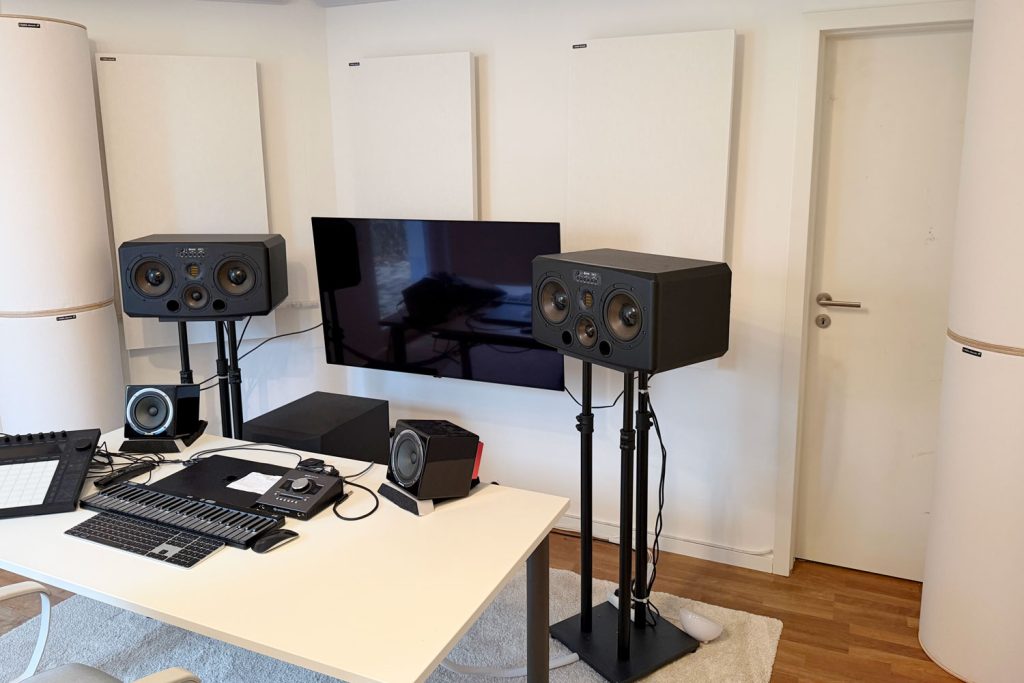
“We had our studio acoustically optimized by HOFA – and the result is outstanding. HOFA did the planning/calculations and developed a solution that works in practice exactly as promised .
Especially in the low end, the previous problem areas have completely disappeared: noticeably tighter, cleaner, more reliable – mixing and decisions now happen instantly. On top of that: fast, clear communication and absolutely fair, because in the end we even had to implement fewer measures. Recommended for anyone who really wants to take their studio to the next level.”
Andreas Rau & Michael Sauer
The Audio Agents
7. Better acoustics = better recordings = a better mix
Good room acoustics don’t just bring major benefits for mixing and mastering – your recordings will also be noticeably better in an acoustically suitable environment.
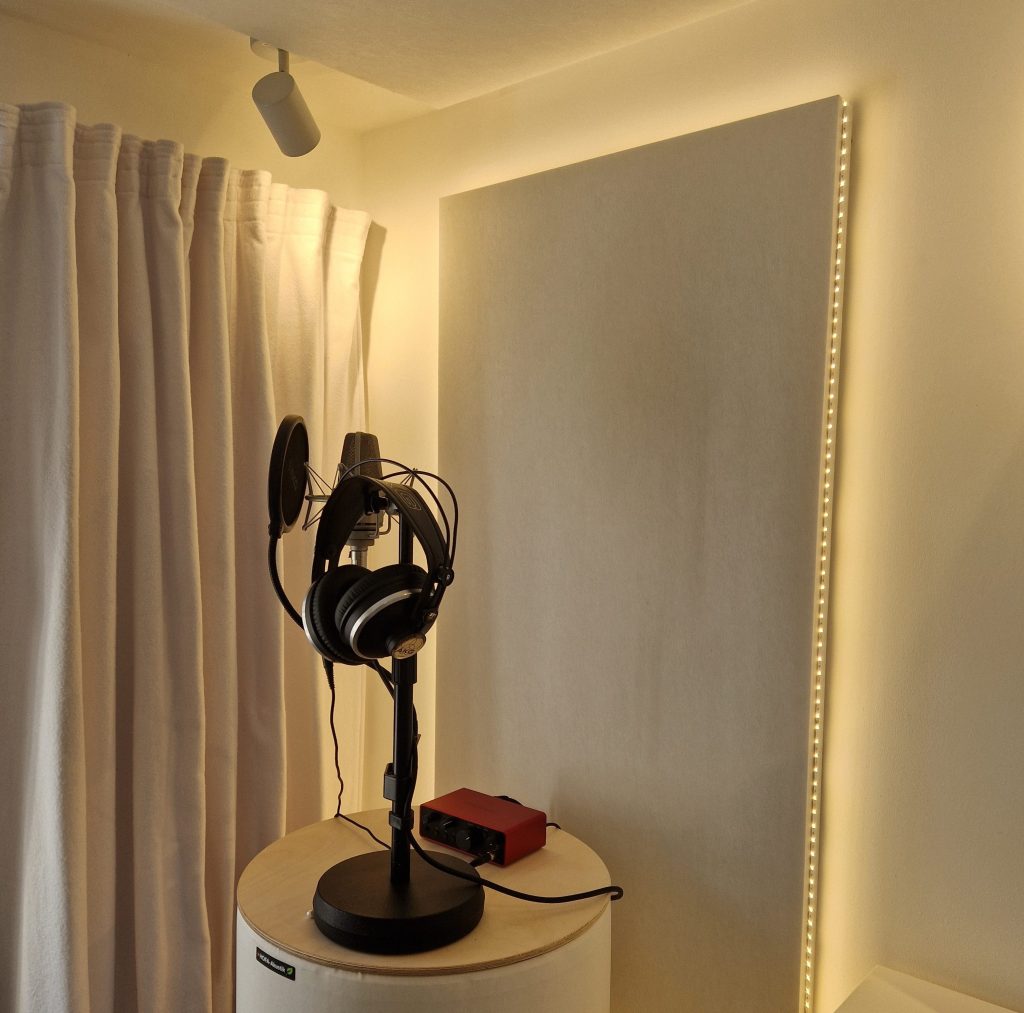
Voice booth optimized with bass trap, acoustic curtain, and HOFA wall sail
Room modes, uncontrolled early reflections, and undefined reverb times are causes of weak, lifeless sound—especially for instruments that should sound powerful yet controlled in the low-mids and bass range. With room acoustic optimization, recordings of instruments and vocals sound more direct, fuller, and more three-dimensional.
You can learn more about these important room-acoustics terms in our blog article “Room acoustics knowledge for your studio – the key terms explained”.
You’ll also save yourself time-consuming post-production based on the “fix it in the mix” principle. Most of the time, that only leads to an unnatural or artificial-sounding result—and you lose time, enjoyment, and room for creativity. When you optimize the recording room, the volume fader becomes your main tool later in the process. Audio correction or repair tools turn into helpers you use sparingly and intelligently. You need fewer steps to achieve an optimal result.
8. Record only what you can actually use
In an untreated room, instruments and vocals are colored by strong reflections, reverb, and a distorted frequency response. With room acoustic optimization, you’ll have more fun and creativity in the room—and you’ll get high-quality recordings that don’t need unnecessary, time-consuming fixes.
9. Room mics for more depth and authenticity
With the right acoustic optimization, capturing a really beautiful sound of your room becomes child’s play. Instead of recording distorted noise with room mics, you can give acoustic instruments more room to breathe and add natural, lively size to them in the mix.
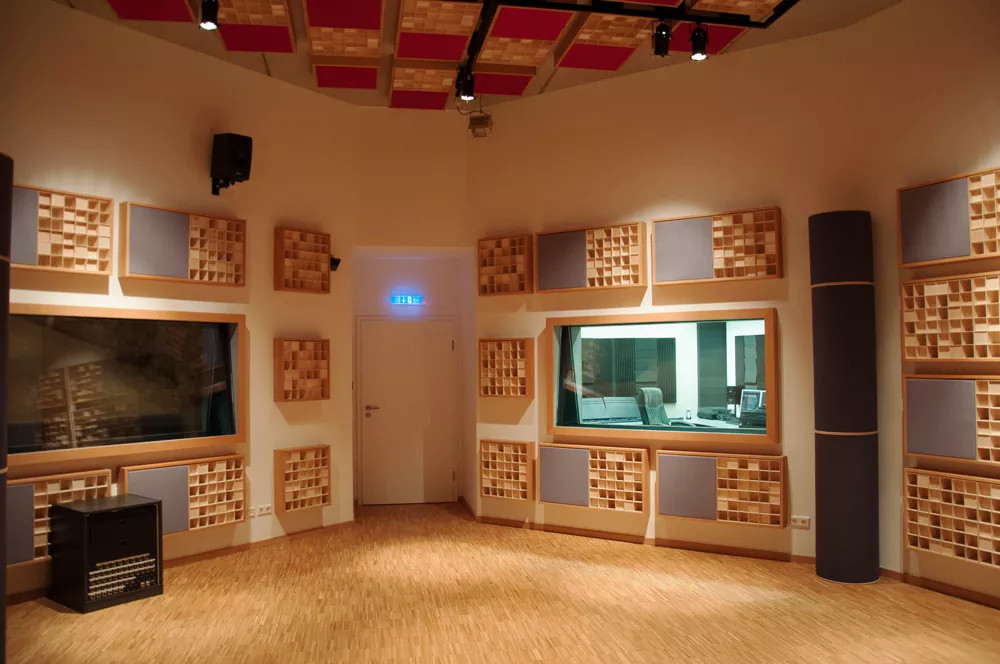
Recording room with HOFA acoustic modules
10. Musicians play better when the room sounds good
When you feel comfortable in the room and can hear yourself well, you play more relaxed and with more expression. That applies in the recording room just as much as in the rehearsal room. Good acoustics make you want to play more, improve performance, and leave more room for creativity.
Conclusion: Your room is your most important tool
Good room acoustics mean you can trust your ears, your mixes translate everywhere, and your recordings sound great right from the source.
If this has sparked your interest in turning your room into a valuable tool in your engineering toolkit, don’t hesitate—let’s work on it together. Feel free to reach out by phone or email, or send us a free planning request. We’re looking forward to your room.